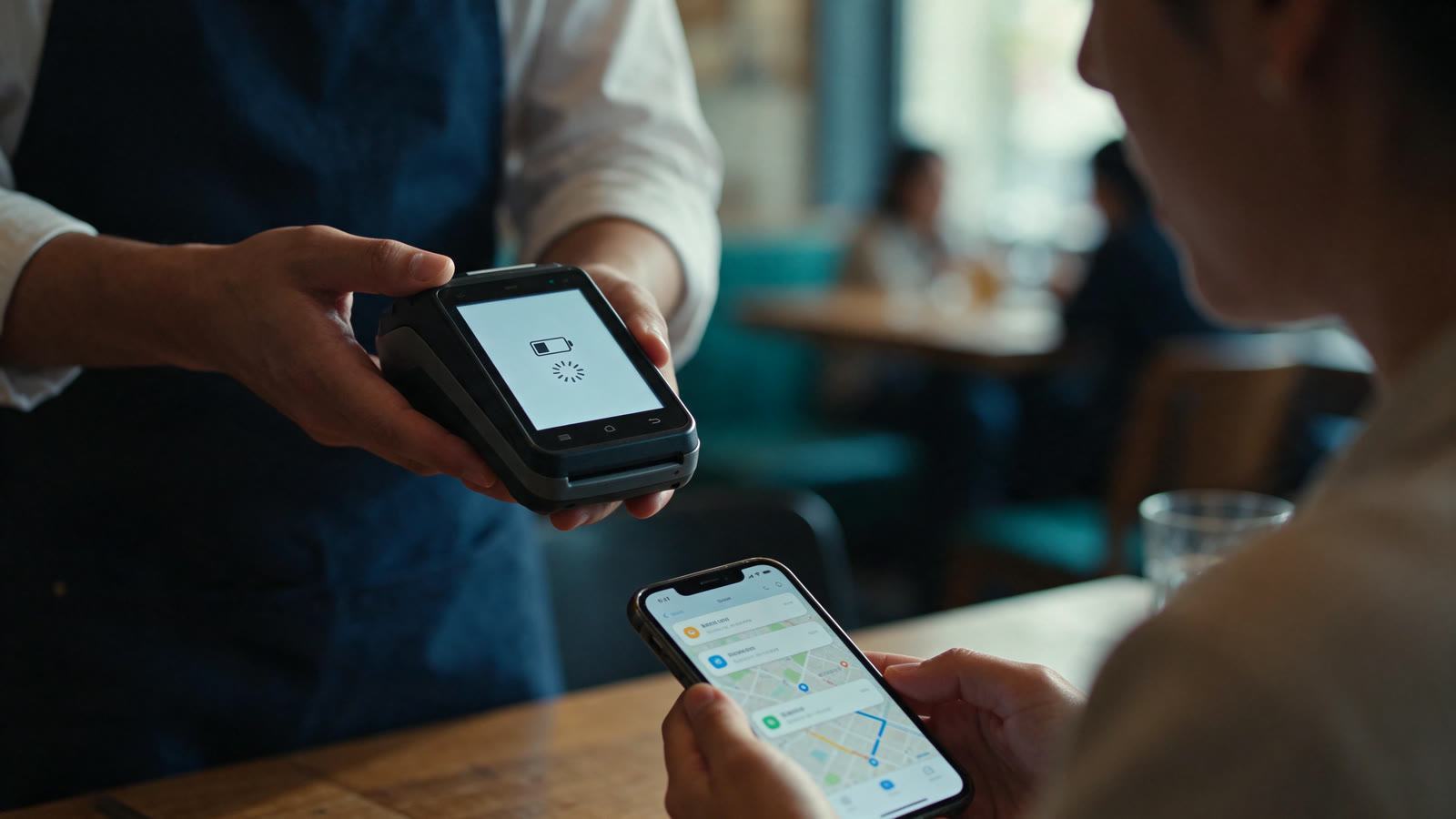
Heartbeats prove a device can reach the server. They do not prove it can take a payment. When a firmware build fails to refresh a secure session after idle, the first sale times out while the heartbeat, on its own connection, stays healthy. An AI agent that checks the heartbeat sees a working device and closes the ticket.
- Device health and transaction health are different measurements. Fleets usually watch the first.
- Split the decline rate by firmware build and the problem stands out as one bar.
- The agent's check is the second defect: close a ticket on transaction health, not on a heartbeat.
- A ransomware attack on a US payment gateway in February 2026 caused a nationwide card-processing outage, and some merchants and organisations told customers they could accept only cash, BleepingComputer reported. 3
A green fleet and a merchant who cannot take a card
A firmware build rolls out to part of a countertop fleet with a release note about secure-session handling improvements. On that build, when a device has sat idle for half an hour or more, the session it uses for payments is not refreshed. The first card-present transaction afterwards sometimes times out and is declined. The second usually works.
For the merchant this is maddening: a customer at the counter, a decline, a retry, an apology. It happens most at the start of a shift and after quiet periods, which are exactly the moments a merchant notices and remembers.
Why the fleet stays green
The heartbeat runs on a different connection from the payment path. It keeps reporting that the device is online, because it is. Fleet-wide online rates do not move. Ticket SLAs are met, because tickets are being closed quickly.
They are being closed by the field-service AI agent. When a merchant reports a problem, the agent checks the heartbeat, sees the device online, and closes the ticket as resolved remotely, advising the merchant to retry. The advice works, briefly, which is why so many of those tickets reopen. Support staff, meanwhile, reach for the reboot macro far more often than they used to. A reboot fixes the problem until the next idle period.
A heartbeat answers one question: can this device reach us? It says nothing about whether the device can complete the job it exists to do. When the agent, the dashboard and the SLA all use the heartbeat as their definition of healthy, a failure in the job itself has nowhere to show up.
The evidence: one bar that stands out
The signal that breaks this open is in the authorisation logs, not the device telemetry. Derive an idle gap for each transaction from the time since the previous one on the same device, then split timeout declines by firmware build and by first-after-idle. Every build sits at the fleet's normal rate except one.
The rest of the evidence falls into place around it:
- the rollout record linking that build to a date and a cohort of devices
- field-service agent traces closing tickets from those devices as resolved remotely, and the reopen rate on them
- reboot macro usage climbing from the same week
- merchant emails complaining about declines, some mentioning other providers
No agent on the device is needed for any of this. Every field already exists in the feeds the business runs on.
Sizing it
The unit of loss is declined volume and merchants at risk of leaving. For your own fleet:
- Count first-after-idle transactions on the affected build since the rollout.
- Apply the excess timeout rate over the fleet's baseline to get the extra declines.
- Multiply by your average ticket for declined volume. Some will have been retried successfully; the rest walked away.
- Add the merchants who have complained or mentioned switching. For many platforms that is the larger number.
The merchant figure is harder to price but easier to act on. Every name on that list is someone your account team can call this week, before a competitor does, with an explanation and a date for the fix.
Why it is a regression, not a surprise
Idle-timeout problems are rarely new. An earlier build often had a similar fault and was rolled back after a few weeks. The rollback ended the incident, but nobody added an idle-then-transact test to the release process, so a later build reintroduced the same class of defect and nothing caught it. Finding that earlier rollback record is what turns this from a bad release into a process gap someone can close.
What fixes it
- Firmware team: patch or roll back the build, and add an idle-then-transact test to the release suite.
- Field-service agent team: an eval case the next agent release must pass. The agent cannot close a ticket as resolved unless the device's recent transaction success rate is at or above baseline.
- Merchant success: an outreach list for the merchants who have complained or mentioned leaving.
Once the fix ships, the evidence that closes the issue is the same split that opened it: the affected cohort's timeout rate back at the fleet's normal level.
Where Traxivo fits
Traxivo reads device telemetry, rollout records, authorisation logs, agent traces, support macros and merchant email through read-only connections, with nothing installed on the devices. It links them into one issue, recognises the earlier rollback as the same failure, names both owners, and drafts the rollback recommendation and merchant outreach for a named approver. It is one of the payments patterns we look for, and devices that report healthy while the outcome fails appear in most of the industries we cover.
The ten use cases on the Traxivo for Payments page are the ones most payments and commerce estates share. Your niche will have failures of its own. We build custom solutions for those on top of the same platform: connectors for the feeds only your niche has, detection for the pattern only your estate shows, and the loss counted in your own unit. The same approach extends to niches such as stored-value and gift card programmes, fuel forecourts and unattended kiosks, restaurant and hospitality point of sale and marketplaces paying out sellers.
Sources
- Cyber Daily. Weekend Mastercard outage resolved, but is customer trust at risk?, 2026.
- Datos Insights, cited by a chargeback vendor. What Mastercard’s Chargeback Research Can Tell Us About Improving the Dispute Process, 2026.
- BleepingComputer. Payments platform BridgePay confirms ransomware attack behind outage, 2026.
Every figure on this page comes from the published source it is linked to and describes the industry at large. None is a Traxivo or customer result.
Frequently asked questions
Why don't device heartbeats catch payment failures?
Because a heartbeat confirms connectivity, often over a separate connection from the payment path. A device can be fully reachable while its payment session fails, so heartbeat-based health stays green.
How do you detect a failure that only happens after idle?
Derive an idle gap for every transaction from the previous transaction on the same device, then compare decline rates for first-after-idle transactions across firmware builds.
What should a field-service AI agent check before closing a ticket?
The outcome the device exists to deliver, such as its recent transaction success rate against baseline, rather than whether it is online.
Stop rediscovering the same integration failure
Traxivo links the alerts, tickets and email threads your teams already produce into one history per issue, recognises when a fault returns, and drafts the follow-up with the evidence attached. Nothing is sent until a person approves it.
See how Traxivo works See Traxivo for Payments