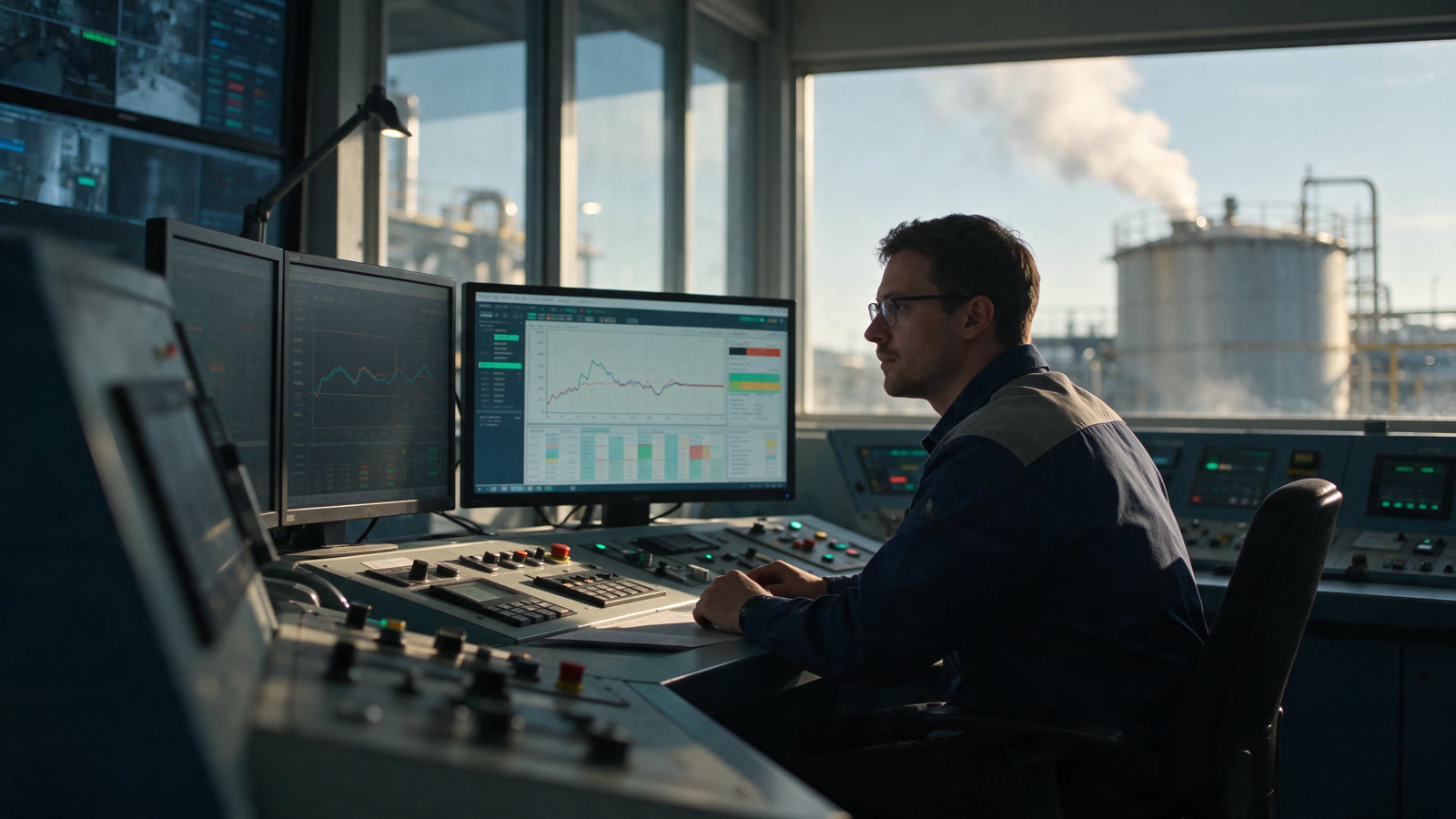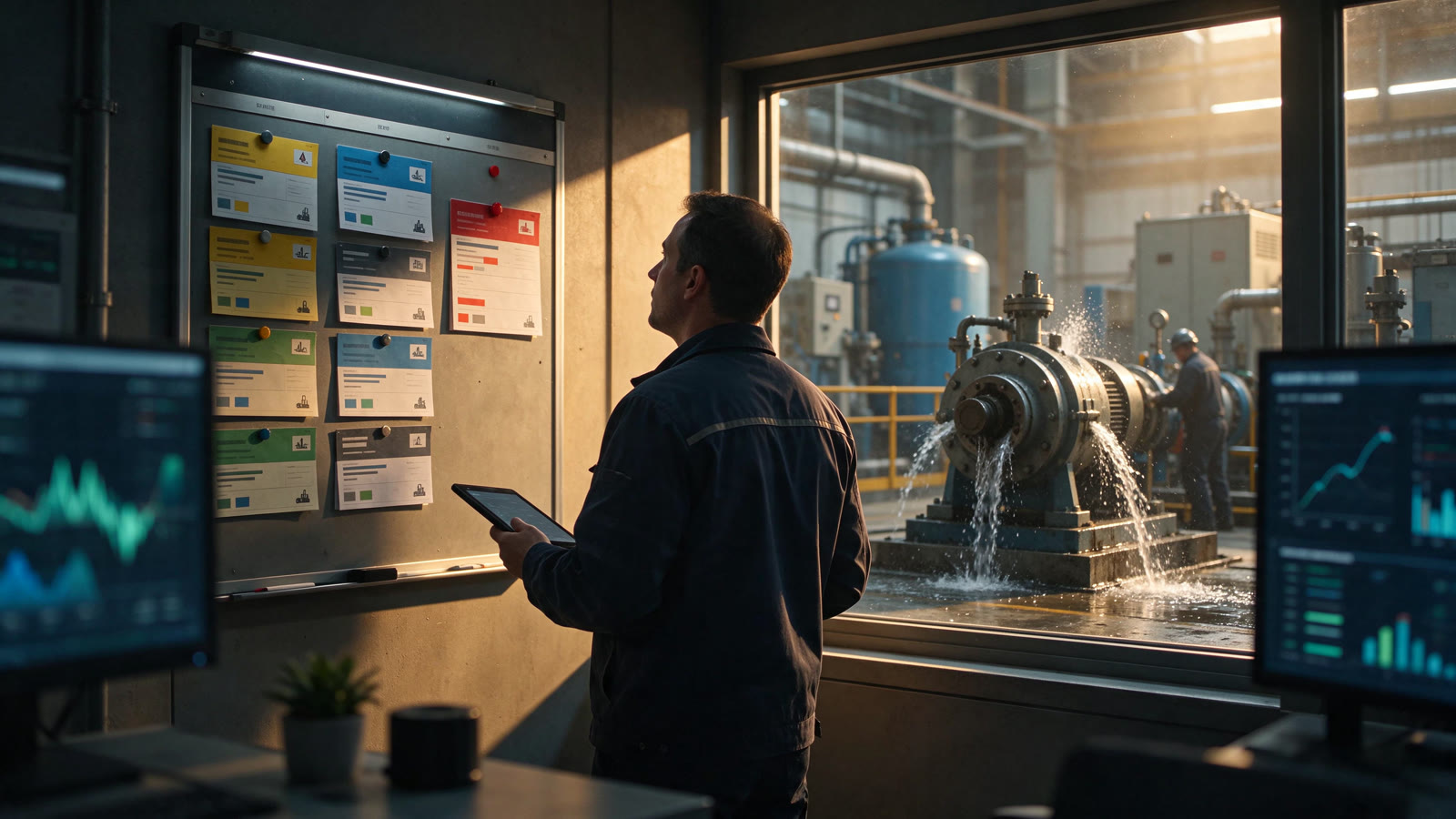
A maintenance agent decides a job is critical and creates the work order. The maintenance system replies that the order exists. If an API change means the priority field is no longer read, the order is stored at the default, low, and joins the routine backlog. The agent's trace says critical, the system says created, and both are accurate. The asset waits, and critical maintenance is delayed with nobody having decided to delay it.
- Created confirms an order exists. It says nothing about whether the fields that decide its place in the queue were stored.
- The tell is a critical asset with an open low-priority order, where the agent's trace shows it asked for something else.
- The eval case: after creating an order, the agent reads it back and compares what was stored with what it intended.
The agent did what it was asked to do
Critical maintenance gets delayed for ordinary reasons: parts are not in stock, the crew is short, production will not release the line. Those delays are visible, and somebody chose them. This post is about a delay nobody chose.
A maintenance agent watches condition data and operator reports, and raises work orders in the maintenance system through its API. When it judges that a bearing on a critical asset is close to failure, it creates an order and sets the priority to the highest level.
Then the maintenance system is upgraded. In the new API version, priority is expressed differently: a renamed field, or named levels where there used to be a number. The agent's tool still sends the old form. The system does not reject the request. It ignores the field it does not recognise, applies its default priority, low, and returns success with a new order number. The agent records the order as raised and moves on.
Why every record is accurate and the outcome is wrong
- The agent's trace shows the right diagnosis, the right tool call and a priority of critical in the request.
- The API returns success. An order was created, which is all the response claims.
- The maintenance system holds a valid order with a valid priority. Low is a legitimate value.
- The planners schedule from the top of the queue, as they should, and the order is not near the top.
- The agent's evals pass. They test whether it chooses the right priority, not whether the system kept it.
The judgement was lost in transit, between a request that said critical and a record that says low.
The records to put side by side
- agent traces: the priority the agent sent with each order it created
- work orders in the maintenance system: the priority stored, and the date of the first mismatch
- the asset register: the criticality of the asset each order is for
- completion times for the orders the agent meant as urgent
- the maintenance system's change record for the API upgrade
A critical asset with an open low-priority order is odd enough to query. Add the trace showing the agent asked for something else, and the date the mismatches began, and the cause is plain.
An API that ignores what it does not understand is being tolerant, which is a reasonable property in an interface. Here it converts a judgement about urgency into a default. The reliable check is to read the order back and compare it with what was meant.
What it costs, and how to size it
The unit of loss is delayed critical maintenance. For your own site:
- For every order the agent has created since the API change, compare the priority requested with the priority stored. Count the mismatches.
- For each mismatch, take the days from creation to completion, or to today if still open, and subtract your target response time for the intended priority. The total is delay, in days, on assets you class as critical.
- Check whether any of those assets failed or was stopped during the delay, and cost those events at your own rate for an unplanned stop.
- List the orders still open. That is today's exposure, and the first thing to hand to planning.
Why it comes back
Notice of an API change goes to whoever administers the maintenance system. The agent may be owned by a different team, which hears about the upgrade late or not at all. If the agent's tests run against a copy of the old API, they keep passing. And a system that ignores unknown fields will drop the next renamed field in the same way: a due date, an asset reference, a safety flag. If this was noticed before, the likely fix was a planner re-prioritising a few orders by hand, which leaves no record for next time.
What fixes it, and who owns each part
- Maintenance planning: re-prioritise the affected open orders today, before anything else.
- Agent platform team: update the tool to the new API, and have it read back each order it creates.
- Maintenance system administrator: where the system allows it, reject requests with unrecognised fields, and tell integration owners about API changes before they go live.
- Reliability engineering: a standing report of critical assets with open low-priority orders.
- The agent's next release: an eval case it must pass. After creating an order, it reads it back, and if the stored priority differs from the one intended, it tells a person. Replayed against the production failures, the current release reports every one as done.
Where Traxivo fits
Traxivo reads agent traces, work orders, the asset register and change records through read-only connections to business systems, and stays outside control networks. It links them into one issue with a history, recognises when a later API change drops another field, names the owners, and drafts the note to planning for a named person to approve. It does not change a work order. The failure becomes an eval case the agent's next release must pass. See the low priority emergency pattern on the industrial page, and agent failures of the same shape in other industries.
The ten use cases on the Traxivo for Industrial page are the ones most manufacturing and industrial iot estates share. Your niche will have failures of its own. We build custom solutions for those on top of the same platform: connectors for the feeds only your niche has, detection for the pattern only your estate shows, and the loss counted in your own unit. The same approach extends to niches such as food and beverage batch plants, discrete assembly with vision inspection, temperature-controlled supply chains and connected equipment makers.
Sources
- Limble (press release carried by Manufacturing Dive). Limble Report Finds Maintenance Teams Struggling to Get Ahead of Downtime, 2026.
- Warranty Week. 23rd Annual Product Warranty Report, 2026.
- Recall filing with the US road safety regulator (NHTSA). Part 573 Safety Recall Report, NHTSA Recall No. 26V369, 2026.
Every figure on this page comes from the published source it is linked to and describes the industry at large. None is a Traxivo or customer result.
Frequently asked questions
Why did the maintenance system accept an order with the wrong priority?
It did not see a wrong priority. After the API change it no longer recognised the field the agent was sending, ignored it, and applied its default. The request was valid and the order was created, which is all the success response confirms.
Why did the agent's evals not catch this?
Because they tested its judgement: whether it picked the right asset, the right job and the right priority. This failure happens after the judgement, in what the system stored. An eval has to include reading the created order back to catch it.
What should the agent do when the stored priority differs?
Report it to a person, with the order number, the priority it intended and the priority stored. It should not report the job as done, and it should not keep retrying silently.
Stop rediscovering the same integration failure
Traxivo links the alerts, tickets and email threads your teams already produce into one history per issue, recognises when a fault returns, and drafts the follow-up with the evidence attached. Nothing is sent until a person approves it.
See how Traxivo works See Traxivo for Industrial